Qdoba Sauces, Salsas & Dressings: Ultimate Calorie & Nutrition Guide (2026)
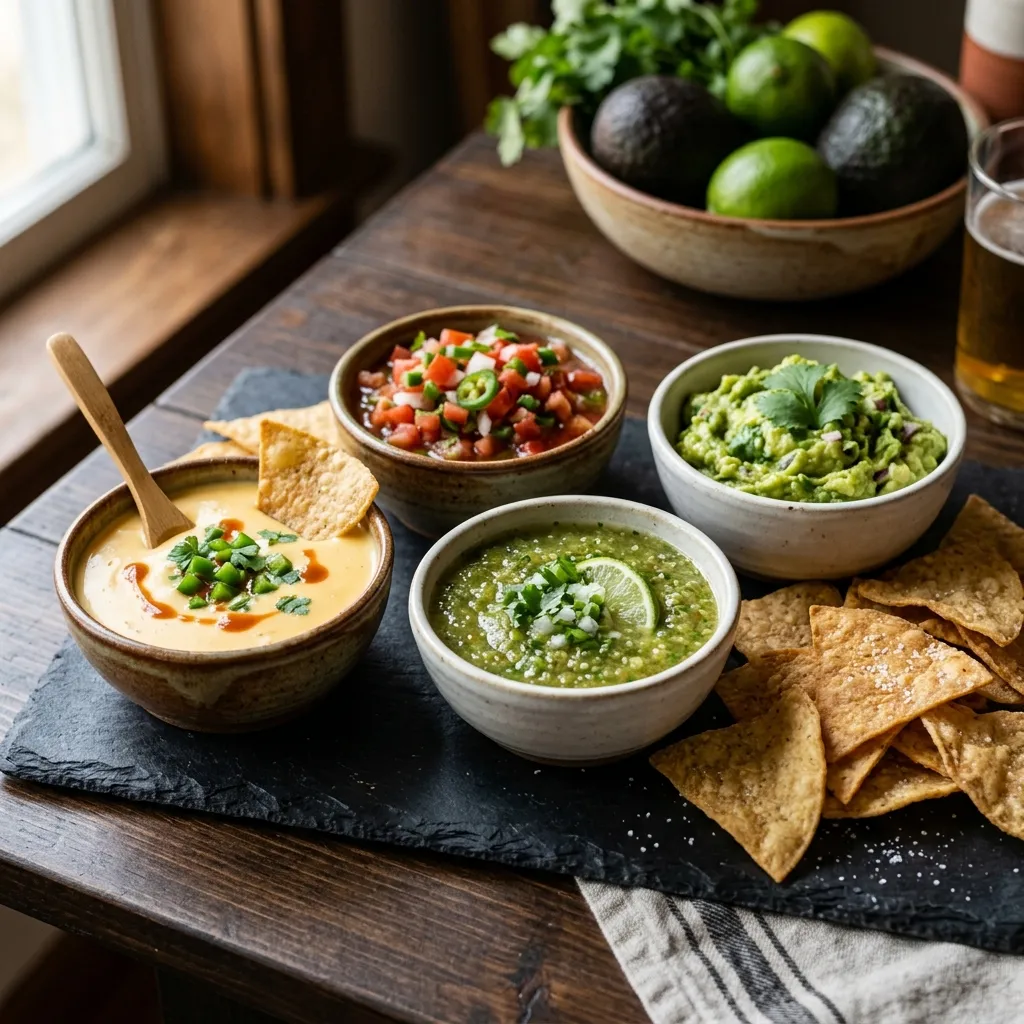
It's easy to focus on your base and protein when building a meal at Qdoba, but the sauces and dressings you add at the end can make or break your diet. A heavy ladle of cream-based sauce can quietly add hundreds of extra calories, while fresh tomato-based salsas provide massive flavor for virtually zero calories. Here is the ultimate calorie and nutrition guide for every Qdoba sauce, salsa, and dressing.
The Complete Sauce & Salsa Nutrition Table
Below is a side-by-side comparison of every sauce, salsa, and dressing available at Qdoba, sorted by calorie count (lowest to highest). Serving sizes are based on standard Qdoba portions (approximately 1 to 2 ounces depending on the item):
| Sauce / Salsa / Dressing | Calories | Protein (g) | Carbs (g) | Fat (g) | Sodium (mg) |
|---|---|---|---|---|---|
| Pico de Gallo | 10 kcal | 0g | 2g | 0g | 160mg |
| Salsa Verde | 15 kcal | 0g | 3g | 0g | 220mg |
| Salsa Roja | 15 kcal | 0g | 3g | 0g | 290mg |
| Fiery Habanero Salsa | 15 kcal | 0g | 3g | 0g | 150mg |
| Sour Cream | 60 kcal | 1g | 2g | 5g | 15mg |
| Roasted Chile Corn Salsa | 80 kcal | 2g | 16g | 1.5g | 340mg |
| Chile Crema | 90 kcal | 0g | 2g | 9g | 180mg |
| Citrus Lime Vinaigrette | 130 kcal | 0g | 7g | 12g | 260mg |
| Hand-Smashed Guacamole | 130 kcal | 2g | 6g | 12g | 240mg |
| 3-Cheese Queso | 150 kcal | 4g | 5g | 11g | 340mg |
Green Light: The Best Low-Calorie Salsas
If you are trying to lose weight or keep your calorie count low, **fresh salsas are your secret weapon.** They provide acidity, moisture, and massive flavor for under 20 calories per serving. You can easily add 2 or 3 of these to your bowl without feeling guilty.
- Pico de Gallo (10 Cal): A fresh, raw mix of tomatoes, onions, cilantro, and lime juice. It adds volume and moisture for next to no calories.
- Salsa Verde (15 Cal): Made from roasted tomatillos and jalapeños. It offers a bright, tangy kick with medium heat.
- Salsa Roja (15 Cal): A traditional red salsa with a smooth texture and mild-to-medium heat.
- Fiery Habanero Salsa (15 Cal): The spiciest salsa on the menu. If you love heat, this is a fantastic way to boost flavor and metabolism for only 15 calories.
Yellow Light: Use in Moderation
These options add healthy nutrients or moderate calories, but they can easily add up if you use multiple or get double portions.
- Sour Cream (60 Cal): Adds creaminess but consists primarily of saturated fat. Ask for a "light" portion or swap for guacamole.
- Roasted Chile Corn Salsa (80 Cal): While packed with sweet, smoky flavor, the corn adds 16g of carbohydrates. Think of this more as a carbohydrate side than a light salsa.
- Chile Crema (90 Cal): A creamy, smoky sauce. At 90 calories and 9g of fat, it's double the calorie count of sour cream, so use it sparingly.
Red Light: Calorie-Dense Toppings & Dressings
These toppings are delicious and offer nutritional value (especially guacamole), but their high fat content makes them very high in calories. If you are tracking macros, these need to be budgeted carefully.
- Citrus Lime Vinaigrette (130 Cal): Many diners order a salad thinking it's the healthiest option, then pour the entire vinaigrette cup over it. At 130 calories and 12g of fat, this dressing alone has more calories than two servings of chicken!
- Hand-Smashed Guacamole (130 Cal): Guacamole is packed with healthy monounsaturated fats, potassium, and fiber. However, a single scoop adds 130 calories. If you add guac, try to skip other high-fat items like cheese or sour cream to balance the meal.
- 3-Cheese Queso (150 Cal): Qdoba's signature queso is legendary, but at 150 calories and 11g of fat, it is the most calorie-dense sauce on the menu. If you can't live without it, ask for it "on the side" so you can control your portions.
How to Manage Hidden Calories at the Counter
To keep your Qdoba custom orders healthy, follow these professional ordering rules:
1. Ask for sauces "on the side": When dressings or queso are served on the side, you can dip your fork in them rather than pouring them over the bowl. This usually cuts your sauce consumption in half.
2. Pick ONE creamy element: Choose either queso, guacamole, cheese, or sour cream. Piling on all four will instantly add over 500 calories of fat to your meal.
3. Use salsas as salad dressing: If you order a salad, skip the Citrus Lime Vinaigrette. Instead, mix Salsa Verde and Pico de Gallo into your lettuce. It acts as a delicious, fat-free dressing that saves you 120 calories.
Conclusion
Qdoba's sauces and dressings don't have to ruin your diet. By choosing fresh salsas for volume and moisture, and budgeting for richer treats like guacamole or queso, you can enjoy a delicious Mexican meal that fits perfectly within your target macros. For more tips on building healthy, low-calorie bowls, check out our guide on Is Qdoba Healthy? An Honest Review or plan your next custom meal using our homepage calculator!